
NBA Contract Types Explained
Maximum Contract
A "max contract" is the most a team can pay a player in the first year of a deal, set as a percentage of the salary cap by years of service: 25% for 0–6 years, 30% for 7–9 years and 35% for 10 or more. With the 2026–27 cap at $164.961 million, that works out to $41,240,250, $49,488,300 and $57,736,350. A player re-signing can instead start at 105% of his previous salary if that is higher — which is why Joel Embiid's 2026–27 salary ($57,985,752) sits just above the 35% max.
Supermax Contract (Designated Veteran Extension)
The supermax lets a team pay its own player with 7–9 years of service up to 35% of the cap — the level normally reserved for 10-year veterans. To qualify, the player must meet award criteria, such as All-NBA selections in the most recent season or two of the last three, or an MVP or Defensive Player of the Year award in that window. Only the player's current team can offer it. Jaylen Brown's five-year deal, signed with Boston in 2023 and now on Philadelphia's books, is a designated veteran extension.
Mid-Level Exception (MLE)
The mid-level exception lets teams over the cap still sign free agents. For 2026–27, the non-taxpayer MLE is $15.044 million, the taxpayer MLE is $6.064 million, and the version for teams with cap room is $9.366 million. It's the main tool contenders use to add a quality rotation player — Tobias Harris's two-year deal with San Antonio this summer was signed with the non-taxpayer MLE.
Veteran Minimum
The minimum salary scales with experience. For 2026–27 it ranges from $1,357,763 for a player with no NBA experience to $3,876,529 for a player with 10 or more years — the exact figure LeBron James earns this season with the 76ers.
NBA Salary Cap 2026–27: The Official Numbers
The NBA set the 2026–27 salary cap at $164.961 million on June 30, 2026, up from $154.647 million in 2025–26. The jump is driven by the league's new 11-year national media rights deals with NBC, ESPN and Amazon Prime Video, worth roughly $76 billion.
What is the Luxury Tax?
The luxury tax is a penalty paid by teams whose payroll exceeds the tax line — $200.428 million in 2026–27. Unlike the NFL's hard cap, NBA teams can spend as much as they want, but every dollar over the line costs extra, and the rate climbs the further a team goes over.
The First and Second Aprons
The 2023 Collective Bargaining Agreement added the "apron" system to discourage extreme spending. Teams above the first apron ($209.015 million) lose access to certain exceptions and can't acquire players in sign-and-trade deals. Teams above the second apron ($221.686 million) face much tighter limits: they can't aggregate salaries in trades, can't use the mid-level exception and have restricted trade options. That's why even deep-pocketed owners are wary of living above the second apron.
Frequently Asked Questions
Who is the highest-paid NBA player in 2026-27?
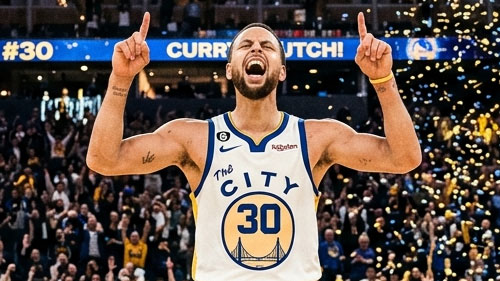
Stephen Curry of the Golden State Warriors is the highest-paid NBA player in 2026-27 with a base salary of $62,587,158. Nikola Jokić is second at $59,033,114, followed by Giannis Antetokounmpo, Anthony Davis and Jayson Tatum at $58,456,566 each.
How much is LeBron James paid in 2026-27?
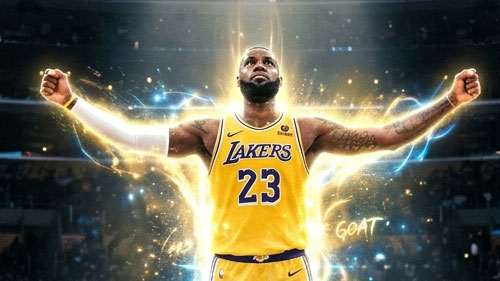
LeBron James earns $3,876,529 in 2026-27, the veteran minimum for a player with 10 or more years of service, on a two-year, $8 million contract with the Philadelphia 76ers. He earned $52,627,153 with the Los Angeles Lakers in 2025-26.
What is the NBA salary cap for 2026-27?
The NBA set the 2026-27 salary cap at $164.961 million. The luxury tax line is $200.428 million, the first apron is $209.015 million, the second apron is $221.686 million and the minimum team salary is $148.465 million.
What is the maximum NBA salary in 2026-27?
First-year maximum salaries in 2026-27 are $41,240,250 for players with 0-6 years of service (25% of the cap), $49,488,300 for 7-9 years (30%) and $57,736,350 for 10 or more years (35%). Players re-signing can also start at 105% of their previous salary if that is higher.
What is a supermax contract in the NBA?
A supermax, formally the Designated Veteran Extension, lets a team pay its own player with 7-9 years of service up to 35% of the cap, a level normally reserved for 10-year veterans. The player must meet award criteria such as recent All-NBA selections, MVP or Defensive Player of the Year. Jaylen Brown's five-year deal signed in 2023 is a designated veteran extension.
What is the NBA minimum salary in 2026-27?
The 2026-27 minimum salary is $1,357,763 for a player with no NBA experience and rises with service to $3,876,529 for players with 10 or more years.
Who was the highest-paid NBA player in 2025-26?
Stephen Curry was the highest-paid player in 2025-26 at $59,606,817, followed by Joel Embiid and Nikola Jokić at $55,224,526 each.