
Origins, Traditions and Meaning of the Easter Celebration
Easter is one of the most meaningful and widely celebrated holidays in the Christian world. Every spring, millions of people gather to celebrate a festival that symbolizes hope, renewal, and the promise of new life. From church services and family gatherings to colorful Easter eggs and joyful spring traditions, Easter carries both deep religious significance and centuries of cultural history.
The history of Easter is fascinating because it connects ancient religious traditions, biblical events, early Christian practices and seasonal celebrations of spring. Over time, Easter evolved into a global holiday that blends faith, symbolism and joyful traditions that continue to inspire people around the world.
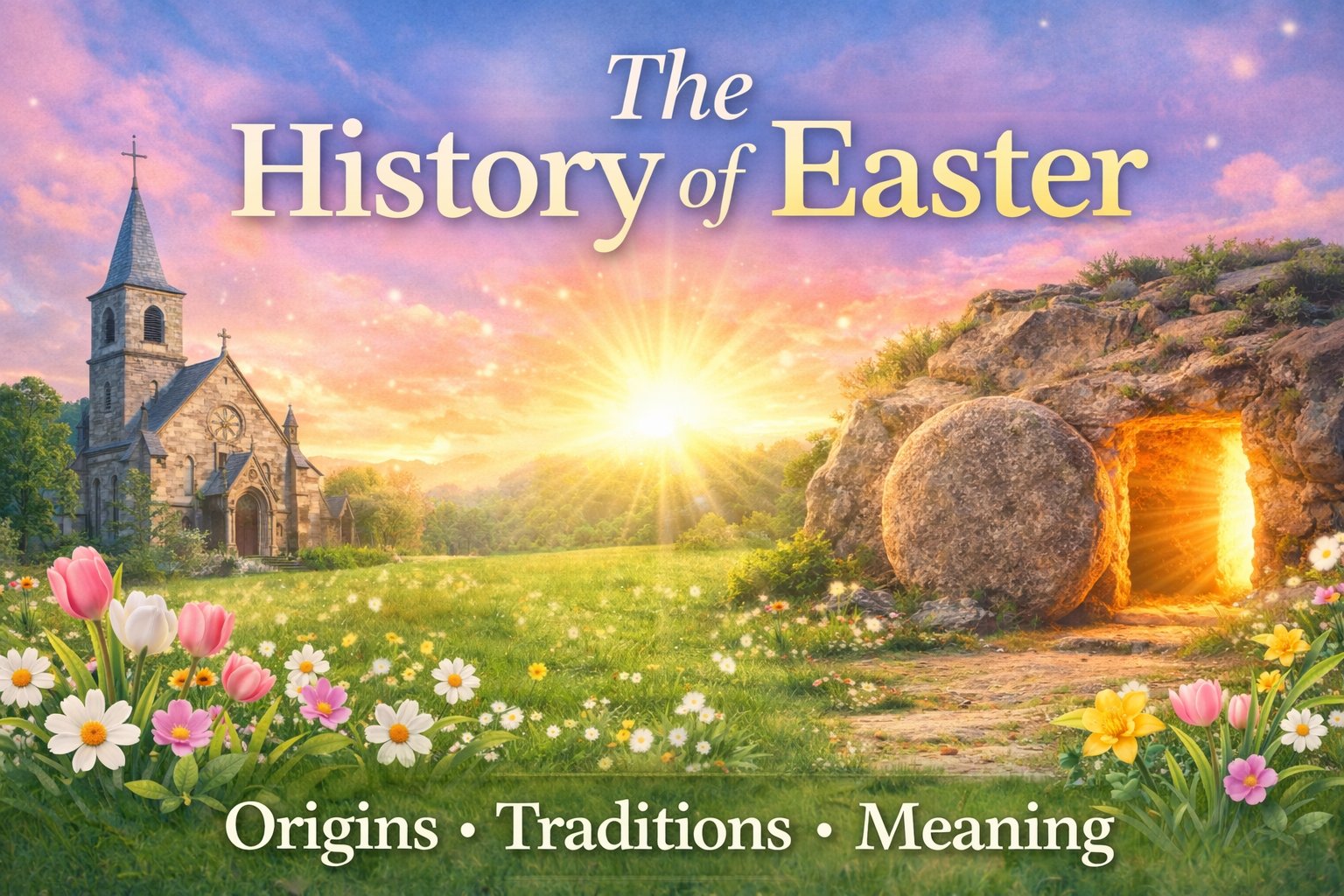
The central meaning of Easter comes from the Christian belief in the resurrection of Jesus Christ. According to the New Testament of the Bible, Jesus was crucified by Roman authorities and rose from the dead three days later. This event is considered the foundation of Christian faith and represents victory over sin and death.
The resurrection story takes place during the Jewish festival of Passover. The Last Supper that Jesus shared with his disciples was believed to be a Passover meal. Because of this connection, early Christians closely linked the Easter celebration with Passover traditions and timing.
For Christians, Easter represents the ultimate message of hope. The resurrection symbolizes renewal, forgiveness and the promise of eternal life for believers.
The earliest Christians began commemorating the resurrection of Jesus soon after the events described in the Gospels. However, different Christian communities celebrated the holiday on different dates during the first few centuries of the Church.
Some early Christians celebrated the resurrection on the same date as Passover, while others believed it should always occur on a Sunday. This disagreement became known as the Easter controversy.
In the year 325 AD, the Council of Nicaea established a standard rule for determining Easter. The council declared that Easter would be celebrated on the first Sunday after the first full moon following the spring equinox. This method is still used today to determine the date of Easter each year.
Unlike holidays such as Christmas, Easter does not have a fixed calendar date. Instead, it follows a combination of solar and lunar calendars. Because the date depends on the full moon after the spring equinox, Easter can occur anytime between March 22 and April 25.
This unique system reflects the historical connection between Easter and the Jewish Passover festival, which also follows the lunar calendar.
Over centuries, Easter developed many beloved traditions. Some of these traditions come from Christian symbolism, while others reflect ancient springtime customs celebrating renewal and fertility.
One of the most famous Easter symbols is the Easter egg. Eggs have long represented new life and rebirth in many cultures. Early Christians adopted the egg as a symbol of the empty tomb and the resurrection of Jesus.
The Easter Bunny is another popular symbol. Rabbits have historically been associated with fertility and the arrival of spring because of their rapid reproduction and connection with seasonal renewal traditions.
Today, these symbols have become joyful traditions for children and families around the world.
The word "Easter" has an interesting linguistic history. According to the 8th-century scholar Bede, the name may have originated from "Eostre," an Anglo-Saxon goddess associated with spring and dawn. The month in which Easter was celebrated was believed to have been named after this deity.
However, most languages do not use the word Easter. Instead, they use variations of the word "Pascha," which comes from the Hebrew word "Pesach," meaning Passover.
This demonstrates how Easter traditions evolved differently across cultures while maintaining the same core religious meaning.
Today, Easter is celebrated in many countries with a wide variety of traditions. Churches hold special services during Holy Week, which begins with Palm Sunday and ends with Easter Sunday.
Families gather for festive meals, children participate in Easter egg hunts, and communities celebrate the arrival of spring with decorations, flowers and joyful activities.
Despite these cultural differences, the core message of Easter remains the same: hope, renewal, and the celebration of new life.
For more than two thousand years, Easter has remained one of the most important celebrations in Christianity. The holiday reminds believers of the resurrection of Jesus Christ and the promise of redemption and eternal life.
At the same time, Easter has become a broader cultural celebration of spring, family, joy and renewal. Whether celebrated through faith, tradition or community gatherings, Easter continues to bring people together around the world.
You may also enjoy exploring other Easter pages on DeepestFeelings:
history of easter, origin of easter, why we celebrate easter, easter history explained, christian easter history, easter traditions history, origin of easter eggs, history of easter bunny, religious meaning of easter, biblical story of easter, easter resurrection story, passover and easter connection, easter traditions around the world, history of easter celebration, when did easter start, why easter date changes, history of easter sunday, origin of easter eggs tradition, spring festival easter history, christian holidays history, easter religious significance, resurrection celebration history, holy week history, good friday and easter history, origin of pascha, easter traditions christian history, ancient easter traditions, easter celebration origins, history of holy week, history of easter festival