Dragon Boat Festival 2026: Greetings, Wishes & Images for WhatsApp, WeChat & Facebook
The Dragon Boat Festival — known in Chinese as Duanwu Jie (端午节) and in Cantonese as Tuen Ng Festival — is one of the four great traditional Chinese holidays, alongside Spring Festival, Tomb-Sweeping Day and Mid-Autumn Festival. In 2026 it falls on Friday, June 19, the fifth day of the fifth lunar month. Across China and Chinese communities worldwide, families wake up to the aroma of steaming zongzi, riverbanks come alive with the thunder of drums and racing dragon boats, and doors are hung with bundles of mugwort and calamus to ward off misfortune.
This page brings you a hand-picked set of Dragon Boat Festival greeting cards, wishes, messages and quotes that you can download free and share on WhatsApp, WeChat Moments, Facebook, Instagram or text message. Whether you're sending a heartfelt 端午安康 (Duanwu Anking — "peace and good health for Duanwu") to family back home, a quick festive wish to colleagues, or a fun greeting to friends, you'll find something below that fits the moment.
Scroll down for the image cards, the text messages and wishes you can copy in one tap, 10 fascinating facts about Duanwu Jie, and an FAQ covering everything from the festival's date to the right way to wish someone.
Dragon Boat Festival 2026 Image Cards for WhatsApp, WeChat & Facebook
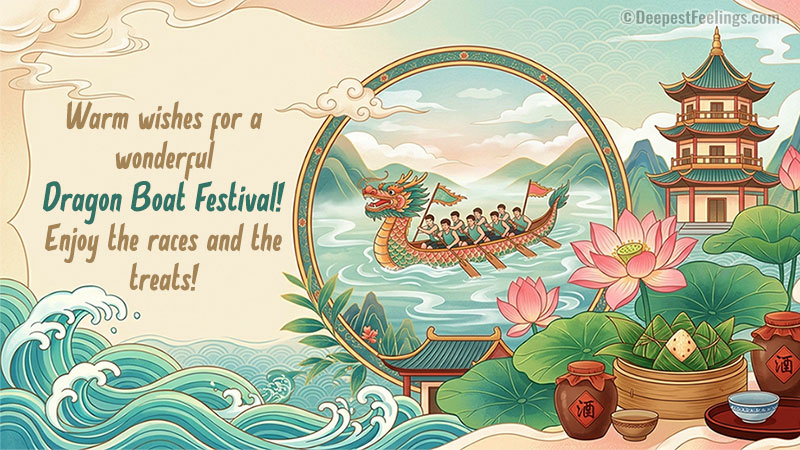
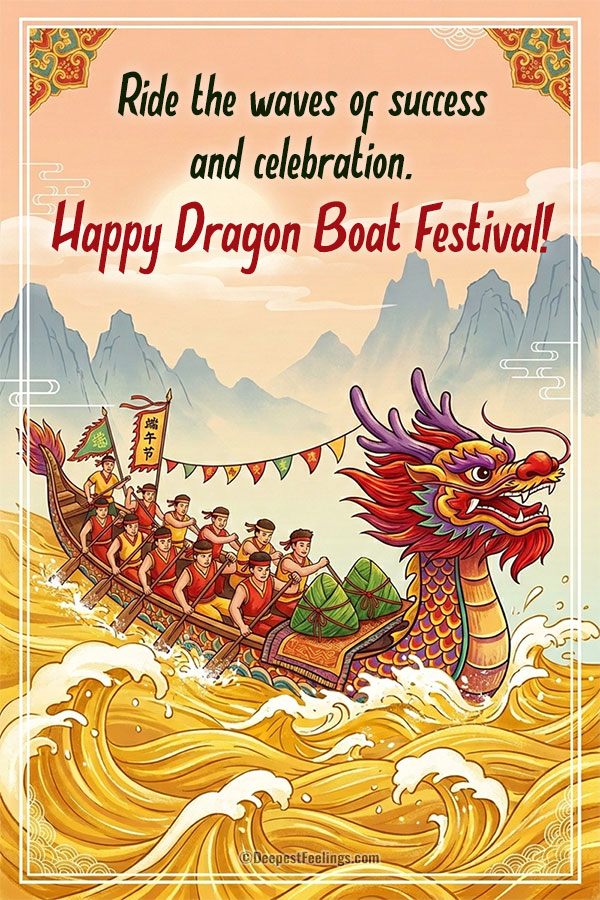
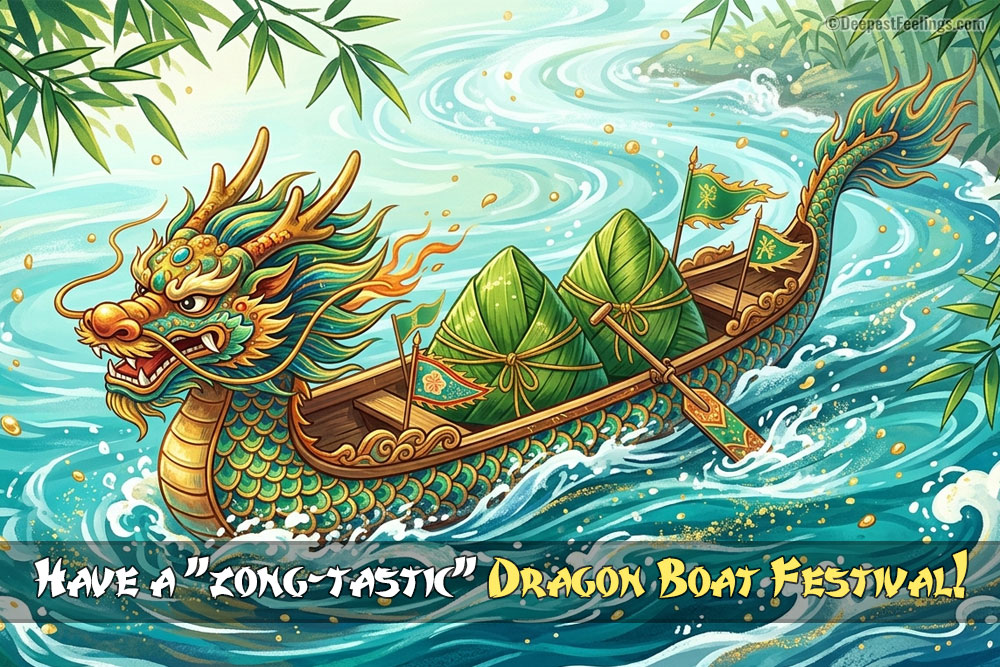
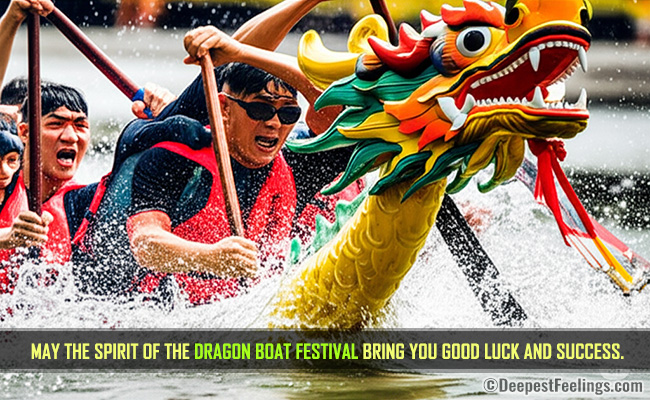
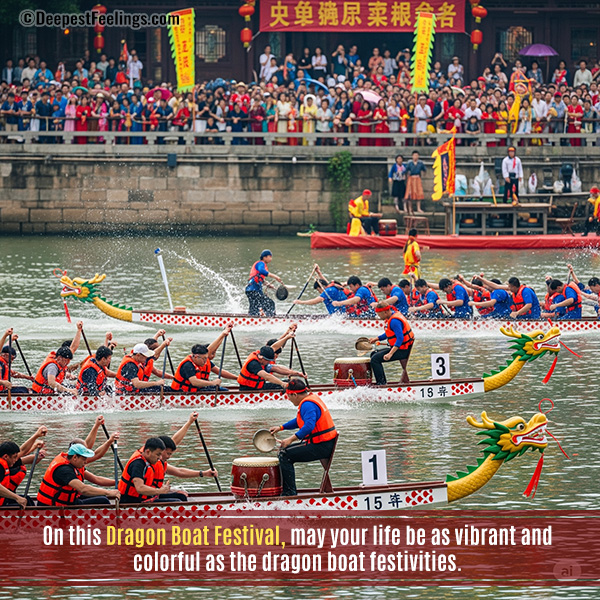
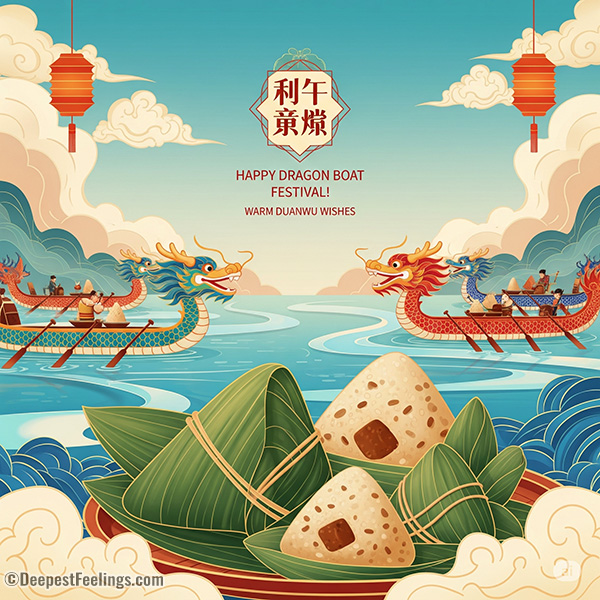
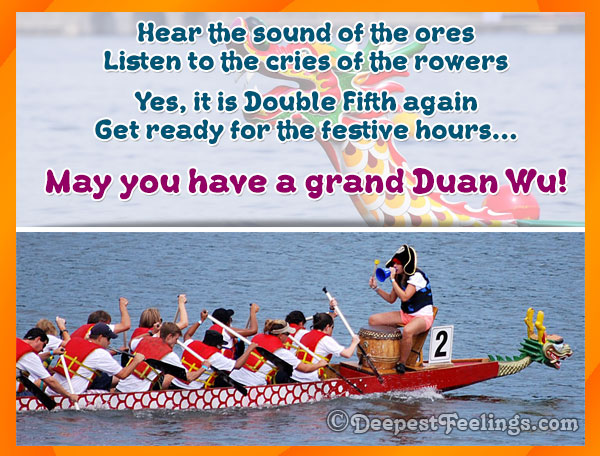
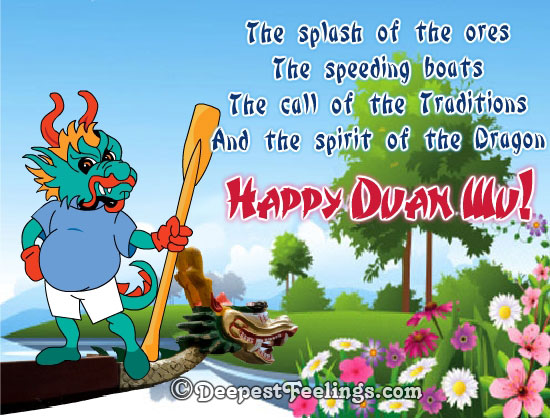
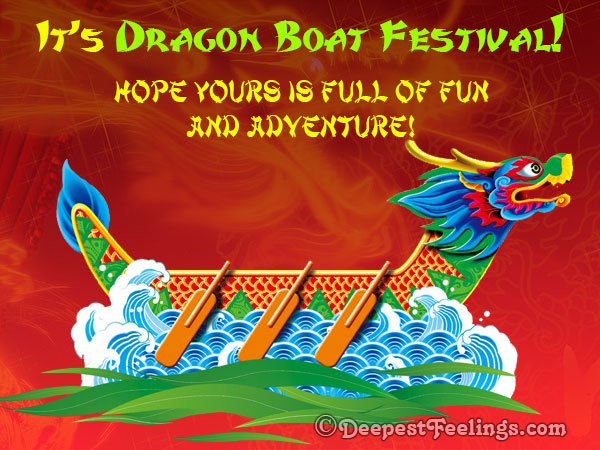
Tap any card to open it full-size and share it on social media. Tap the green Download button to save the image directly to your phone or computer — then attach it to a WhatsApp chat, a WeChat Moment or a Facebook post. Every image on this page is free to download and share.








Dragon Boat Festival Wishes & Messages to Copy and Send
Looking for the right words? These short Dragon Boat Festival wishes are perfect for a WhatsApp Status, a WeChat Moment, a Facebook caption, an Instagram story, or a personal message to family, friends and colleagues. Tap and hold any quote on mobile to copy it.
Traditional & Heartfelt Wishes
May your Dragon Boat Festival be wrapped in joy the way bamboo leaves wrap a perfect zongzi — tightly, sweetly, and with every layer holding something good. Duanwu Anking!
As the drums beat and the dragon boats race, may every wave carry your worries away and every paddle bring fortune closer. Wishing you and your family a peaceful, healthy Duanwu Jie 2026.
Sticky rice for sweetness, bamboo leaves for strength, and the spirit of Qu Yuan for the courage to stand by what matters — may all three be with you this Dragon Boat Festival.
Short Wishes for WhatsApp Status & WeChat Moments
Happy Dragon Boat Festival! May your year race ahead like a winning dragon boat. 🐉
端午安康 — wishing you peace, health and many sweet zongzi this Duanwu Jie!
Paddles up, hearts steady, drums loud. Have a thrilling Dragon Boat Festival 2026!
Wishes for Family & Loved Ones
To the family that wraps every memory as tenderly as Grandma wraps zongzi — a very happy and healthy Dragon Boat Festival to all of you. May we share many more drum-beats, many more dumplings, and many more festivals together.
Distance can't unwrap the bond we share. Sending you the warmest Duanwu Jie wishes across the miles — eat an extra zongzi for me, and I'll do the same for you.
Wishes for Friends
Friends are like the bamboo leaves around a zongzi — they hold everything together and make life richer inside. Happy Dragon Boat Festival, my friend!
May your festival be loud with laughter, sweet with rice dumplings, and just a little reckless with realgar wine. Happy Duanwu Jie!
Wishes for Colleagues & Business Partners
Wishing you a Dragon Boat Festival full of momentum — may your projects glide forward like a dragon boat on calm water, and may every milestone feel as satisfying as the first bite of zongzi. Duanwu Anking to you and your team.
Thank you for another year of teamwork and trust. May this Duanwu Jie bring you rest, your family good health, and the year ahead more wins than we can count. Happy Dragon Boat Festival 2026.
A Wish for Children
Hello, little zongzi! May your Dragon Boat Festival be packed with sticky-sweet rice, splashy boat races on TV, and at least one nap after lunch. Happy Duanwu Jie!
The Meaning & Origin of the Dragon Boat Festival
The most widely told origin story behind the Dragon Boat Festival is the legend of Qu Yuan (340–278 BCE) — a poet and minister of the Chu state during China's Warring States Period. Loyal and outspoken, Qu Yuan was banished after rival ministers accused him of conspiracy. When his beloved Chu fell to the rising state of Qin, the heartbroken poet tied a stone to his chest and drowned himself in the Miluo River on the fifth day of the fifth lunar month.
Villagers who admired him raced out in their boats to find his body — the origin, the story says, of dragon boat racing. When they failed to recover him, they dropped balls of sticky rice wrapped in leaves into the water so the fish would eat those instead of Qu Yuan — the origin of zongzi.
Other regional traditions remember different figures on the same day: the Wu state statesman Wu Zixu in Suzhou, and the filial daughter Cao E in parts of Zhejiang. Scholars also point to older roots in dragon worship, summer-solstice rituals, and early agricultural festivals in southern China. Whatever the layered history, the modern festival is a celebration of patriotism, family, and the work of warding off summer's heat and disease.
10 Fascinating Facts About the Dragon Boat Festival
Dragon Boat Festival 2026 — Frequently Asked Questions
When is Dragon Boat Festival 2026?
Dragon Boat Festival 2026 falls on Friday, June 19. Mainland China observes a three-day public holiday from June 19 to June 21, while Hong Kong, Macau and Taiwan mark the day with a one-day public holiday on June 19.
Why is the Dragon Boat Festival celebrated?
It commemorates Qu Yuan, a patriotic poet and minister of the Chu state who drowned himself in the Miluo River on the fifth day of the fifth lunar month in 278 BCE after his homeland fell. Local people raced boats to find his body and dropped sticky rice into the river to stop the fish from eating him — the origin of dragon boat racing and zongzi.
Should I say "Happy" or "Healthy" Dragon Boat Festival?
Both are used. Many Chinese speakers prefer "Duanwu Anking" (端午安康) — "peace and good health for Duanwu" — because the day is partly about warding off disease and remembering Qu Yuan's death, which makes a cheerful "happy" greeting feel less fitting. That said, "Duanwu Kuaile" (端午快乐) — "Happy Dragon Boat Festival" — is still widely used, especially in informal settings, on cards, and with non-Chinese friends.
What is Duanwu Jie?
Duanwu Jie (端午节) is the Chinese name for the Dragon Boat Festival. It literally means the "Start-of-the-Fifth-Solar-Month Festival" and is also called the Double Fifth Festival because it falls on the fifth day of the fifth month of the Chinese lunar calendar. In Cantonese-speaking Hong Kong, its official English name is Tuen Ng Festival.
What foods are eaten on the Dragon Boat Festival?
The signature food is zongzi (粽子) — pyramid-shaped glutinous rice dumplings wrapped in bamboo or reed leaves and tied with string. Fillings range from sweet (red-bean paste, dates, lotus seed) to savoury (pork belly, salted egg yolk, mushroom, chestnut), and they vary widely by region. Some families also eat eel (popular in Wuhan), drink realgar wine, or enjoy regional treats like Mianshanzi.
How do I share Dragon Boat Festival images on WhatsApp and WeChat?
Tap any image above to open it full-size, then long-press to save it to your phone — or click the green Download button below the image. Open WhatsApp or WeChat, choose a chat or your Status / Moments feed, attach the saved image, add one of the wishes from this page if you'd like, and hit send. All cards on this page are free to download and share.
Why are dragon boats decorated as dragons?
In Chinese mythology, dragons are water deities and bringers of rain — opposite to the destructive Western dragon. Decorating racing boats with carved dragon heads and tails honours these benevolent water spirits and is also believed to bring the rowers protection on the water. A drummer at the bow beats time so all 20 paddlers stroke together.
When is Dragon Boat Festival in 2027 and 2028?
Because the date follows the Chinese lunar calendar, it shifts each Gregorian year. The Dragon Boat Festival falls on Wednesday, June 9, 2027 and on Thursday, May 28, 2028. It typically lands in June, occasionally late May.
FIFA World Cup 2026 Quiz
NFL Hub 2026
NBA Hub 2026
MLB Hub 2026
Fantasy Football
NBA Fantasy
NBA Draft (Fantasy)
Discover Trending Content
Web Stories
Animated Birthday Greetings
Greeting Cards & More
Halloween
Halloween Images for WhatsApp
Navratri
Durga Puja
Dussehra
Sweetest Day
Thanksgiving
Christmas
Happy Birthday Cards
Congratulations Cards
Love & Care Cards
Attitude Quotes & Cards
Being Myself Images
Good Morning Cards
Thank You Cards