The Jewish Festival of Booths runs from sundown on September 25 to October 2, 2026. Dates, customs, Hebrew greetings and free cards to share.
Sukkot 2026 begins at sundown on Friday, September 25, 2026, and ends at nightfall on Friday, October 2, 2026. The seven-day Jewish Festival of Booths (15–21 Tishrei 5787) is followed by Shemini Atzeret on October 3 and, outside Israel, Simchat Torah on October 4. The most common greeting is Chag Sameach (“Happy holiday”). Below you will find the full day-by-day calendar, the meaning and customs of the festival, Hebrew greetings with translations, and 17 free Sukkot cards to copy, download and share.
Start: Friday, September 25, 2026, at sundown (15 Tishrei 5787)
End of Sukkot: Friday, October 2, 2026 (Hoshana Rabbah, the seventh day)
Shemini Atzeret / Simchat Torah: sundown October 2 to nightfall October 4, 2026 (one combined day, October 3, in Israel)
Like every Jewish festival, Sukkot begins at sundown the evening before its first calendar day. In 2026 both the first day of Sukkot and Shemini Atzeret fall on Shabbat, so the lulav and etrog are not taken on Saturday, September 26, and are first used on Sunday, September 27.
| Date (2026) | Hebrew date | Outside Israel | In Israel |
|---|---|---|---|
| Fri, Sep 25 | 14 Tishrei | Erev Sukkot: festival begins at sundown | Same |
| Sat, Sep 26 | 15 Tishrei | Sukkot Day 1 (Shabbat; no lulav) | Same |
| Sun, Sep 27 | 16 Tishrei | Sukkot Day 2 (full festival day) | Chol HaMoed begins |
| Mon, Sep 28 – Thu, Oct 1 | 17–20 Tishrei | Chol HaMoed (intermediate days) | Chol HaMoed |
| Fri, Oct 2 | 21 Tishrei | Hoshana Rabbah (Day 7); Shemini Atzeret begins at sundown | Same |
| Sat, Oct 3 | 22 Tishrei | Shemini Atzeret (Shabbat) | Shemini Atzeret and Simchat Torah |
| Sun, Oct 4 | 23 Tishrei | Simchat Torah; ends at nightfall | Regular day |
Exact candle-lighting and nightfall times depend on your city. Check a local Jewish calendar or your synagogue for times where you live.
Sukkot (Hebrew: סוכות, “booths”), also called the Feast of Tabernacles or Festival of Booths, is a seven-day Jewish festival that begins on 15 Tishrei, five days after Yom Kippur. It commemorates the temporary shelters the Israelites lived in during their 40 years in the desert after the Exodus from Egypt, and it also celebrates the autumn harvest, which is why the Torah calls it Chag HaAsif, the Festival of Ingathering.
Sukkot is one of the three pilgrimage festivals (Shalosh Regalim), alongside Passover and Shavuot, when Jews in ancient times travelled to the Temple in Jerusalem. The festival prayers call it Zman Simchatenu, “the Season of Our Rejoicing,” and joy is considered a central obligation of the week.
Building and dwelling in a sukkah. Families build a temporary hut, the sukkah, roofed with branches or leaves called schach, loose enough that the stars can be seen at night. Meals are eaten in the sukkah for the whole week, and some people sleep in it too. Sukkahs are often decorated with fruit, paper chains, lights and children's artwork.
Taking the Four Species. Each day except Shabbat, the lulav (palm frond), bound with hadass (myrtle) and aravah (willow), is held together with the etrog (citron) and waved in six directions: east, south, west, north, up and down.
Welcoming guests. Hospitality is a hallmark of Sukkot. Many families invite friends and neighbours into the sukkah, and a mystical custom welcomes the Ushpizin, seven spiritual guests: Abraham, Isaac, Jacob, Moses, Aaron, Joseph and David.
Hoshana Rabbah. On the seventh day, worshippers circle the synagogue seven times with the Four Species and beat bundles of willow branches, marking the close of the festival week.
Because Sukkot blends impermanence, hospitality and abundance, it is a natural time to reach out to people you care about, which is exactly what the cards below are for.
If you are not sure what to say, Chag Sameach works on every day of the festival. Here are the most common Sukkot greetings and when to use them:
| Greeting | Hebrew | Meaning | When to use it |
|---|---|---|---|
| Chag Sameach | חג שמח | Happy holiday | Any day of the festival |
| Chag Sukkot Sameach | חג סוכות שמח | Happy Festival of Sukkot | Any day of the festival |
| Moadim L'Simcha | מועדים לשמחה | Times of joy | Mainly Chol HaMoed |
| Chagim u'zmanim l'sasson | חגים וזמנים לששון | Holidays and seasons for gladness | Reply to Moadim L'Simcha |
| Gut Yontif | — | Good holiday (Yiddish) | Festival days, Ashkenazi communities |
Every card below is free to download. Tap Copy text to copy the matching wish, then paste it alongside the image in WhatsApp, Facebook, Instagram, email or a text message. Square cards suit feed posts; the portrait cards further down are sized for WhatsApp status and Instagram Stories.
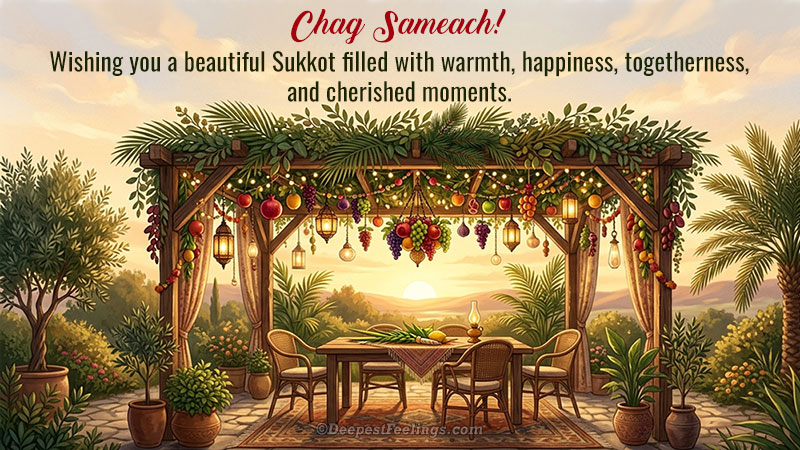
Chag Sameach! Wishing you a beautiful Sukkot filled with warmth, happiness, togetherness and cherished moments in the sukkah.
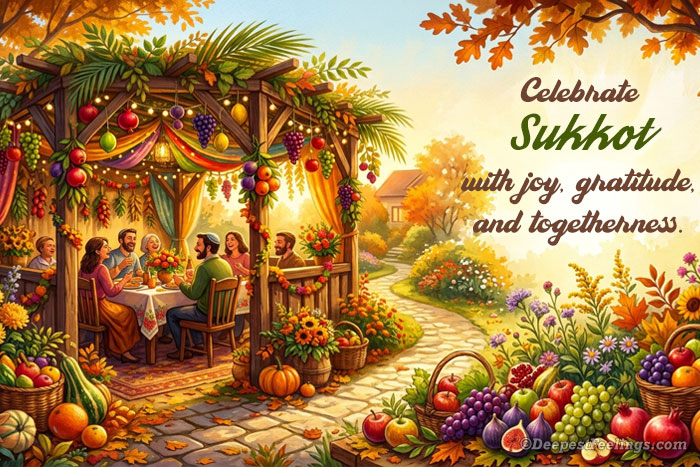
Celebrate Sukkot with joy, gratitude and togetherness. May your harvest of blessings be plentiful this year.
May this week of Sukkot be filled with wonderful memories. Happy Sukkot!
Chag Sukkot Sameach! May your holiday be filled with happiness, reflection and the blessings of the Four Species.
Moadim L'Simcha! Wishing you a peaceful and joyful Sukkot.

Ideal for the intermediate days of Chol HaMoed, when Moadim L'Simcha is the customary greeting.
May your sukkah be filled with joy, peace, prosperity and togetherness this year.
May this festival bring joy, happiness and blessings to your home. Happy Sukkot!
May your home be blessed with happiness and joy. Happy Sukkot!
Coming just days after Yom Kippur, Sukkot is the season of our rejoicing. May your heart be light and your year be blessed. Happy Sukkot!
May the blessings of Sukkot bind you and your family in togetherness, love and prosperity.
Chag Sukkot Sameach! (Happy Festival of Sukkot!)
Moadim L'Simcha! (Times of joy!)
Happy Sukkot! Wishing you a festival of joy, gratitude and shelter under the stars.
Sending you warm wishes for a sweet and joyful Sukkot. Chag Sameach!
Happy Sukkot! May this week of joy fill your home with light, laughter and loved ones.
Chag Sameach to you and your family! May the joy of Sukkot stay with you all year long.
Being Jewish is about being in love with Sukkot. Happy Sukkot!
Pick the card that matches your tone, whether traditional, warm or simply festive, and send it to friends, family and community. However you celebrate, may this Sukkot bring your household joy, unity and a renewed appreciation for the blessings of the season.
Sukkot 2026 begins at sundown on Friday, September 25, 2026 (15 Tishrei 5787) and its seven days end at nightfall on Friday, October 2, 2026. It is followed immediately by Shemini Atzeret on October 3 and, outside Israel, Simchat Torah on October 4, 2026.
Yes. The first full day of Sukkot, September 26, 2026, falls on Shabbat. Because the Four Species are not taken on Shabbat, the lulav and etrog are first used on Sunday, September 27. Shemini Atzeret, on October 3, also falls on Shabbat.
“Chag Sukkot Sameach” is Hebrew for “Happy Festival of Sukkot.” It is the standard greeting throughout the holiday and is often shortened to “Chag Sameach,” meaning “Happy holiday.”
“Moadim L'Simcha” means “Times of joy.” It is used mainly during Chol HaMoed, the intermediate days of the festival. The traditional reply is “Chagim u'zmanim l'sasson,” meaning “Holidays and seasons for gladness.”
Sukkot lasts seven days. In Israel the first day is a full festival day followed by six intermediate days (Chol HaMoed). Outside Israel the first two days are full festival days followed by five intermediate days. The seventh day is called Hoshana Rabbah.
The Four Species (arba minim) are the lulav (palm frond), the etrog (citron), the hadass (myrtle) and the aravah (willow). The palm, myrtle and willow are bound together and held with the etrog, then waved in six directions during the festival prayers.
A sukkah is a temporary hut with a roof of leaves or branches, called schach, built to fulfil the commandment in Leviticus 23:42 to dwell in booths for seven days. It recalls the shelters the Israelites lived in during 40 years in the desert after the Exodus. Families eat their meals in the sukkah, and some also sleep there.
Sukkot is the seven-day festival of booths. Shemini Atzeret, the “Eighth Day of Assembly,” is a separate holiday that follows immediately. Simchat Torah celebrates completing and restarting the annual Torah reading. In Israel Shemini Atzeret and Simchat Torah fall on the same day; outside Israel Simchat Torah is observed the following day.
Yes. Sukkot is a joyful, welcoming festival with a strong tradition of hospitality, and a simple “Happy Sukkot” or “Chag Sameach” is a warm and respectful greeting from anyone, Jewish or not.
All Sukkot greeting cards on this page are created by DeepestFeelings and are free to download and share for personal, non-commercial use, including on WhatsApp, Facebook, Instagram, email and text messages. Please do not sell the images, alter them to remove the DeepestFeelings branding, or republish them on other websites without permission. For any other use, please contact us.
Last updated: September 22, 2026.